U City Adelaide
Alex Hall, Woods Bagot
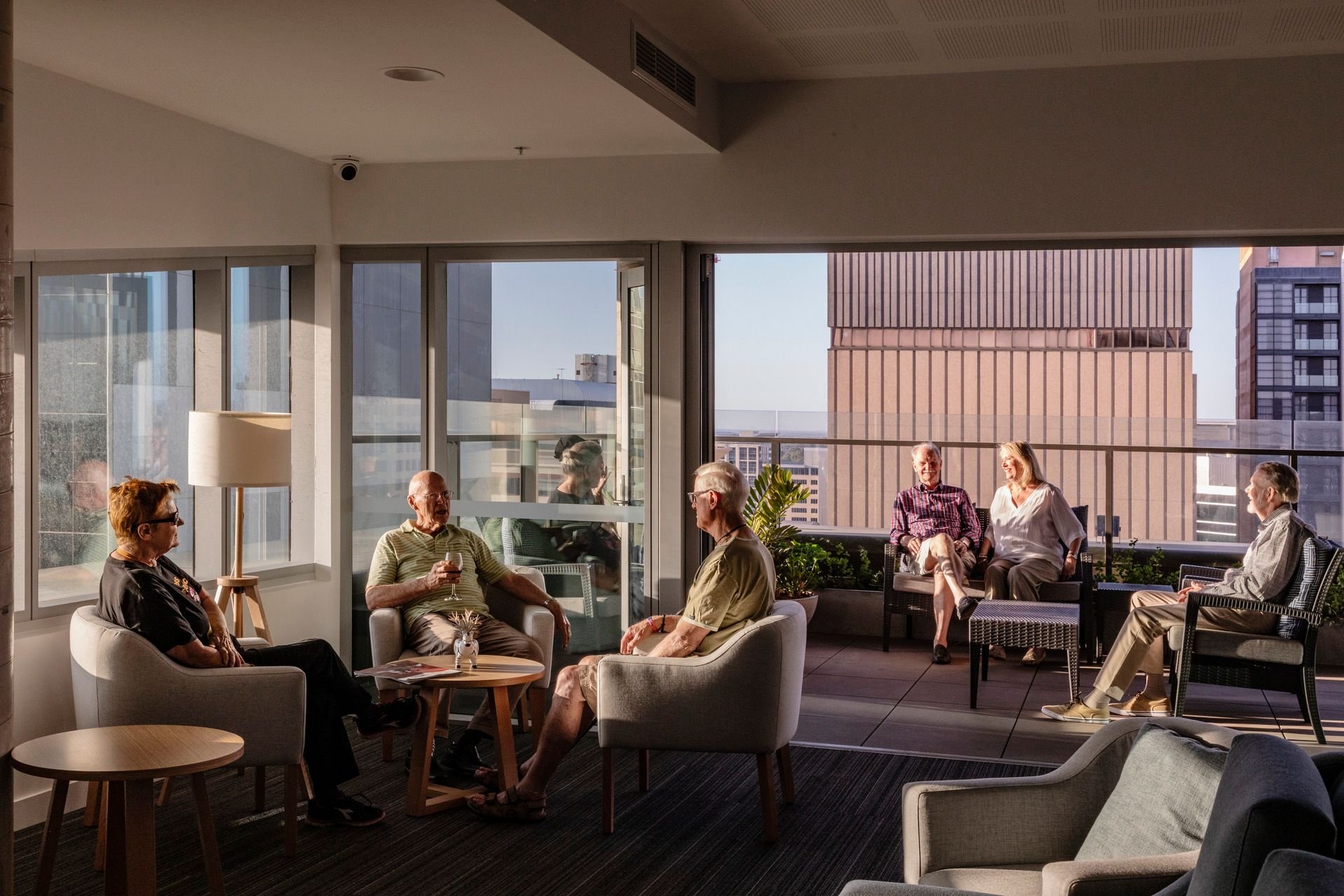
Retirement Living Apartments communal space. Source: Trevor Mein
U City highlights the potential of faith-based organisations to provide greater housing choice for the retirement living sector and persons with disabilities. This case study demonstrates innovation in the design, delivery and management of retirement living and Specialist Disability Accommodation.
We spoke to Alex about how a continuum of care model supports well-being outcomes for the building's residents and users, and how this ‘radical’, mixed-use project paired with targeted design outcomes, delivers people focused, inclusive environments that foster a dynamic and diverse community.
Reading time: 8 minutes
How did the client’s holistic approach to sustainability define the direction for the project?
From the outset it was clear that Uniting Communities had high aspirations for the project and wanted to achieve a recognised level of Australian excellence for building design and sustainability. We were excited by their holistic approach to social and environmental sustainability and understood that U City should create a diverse and inclusive community, and integrate carbon neutral measures. Embedding the continuum of care model in the project illustrated an ambition to adopt a person-centred approach and a genuine commitment to positively impact the lives of residents, workers and casual users. In response, we devised the theme ‘Living First’, which focuses on creating good places for people to live, work and visit, and prioritises well-being and health outcomes.
Why was the location important and how did it add value to the project and Adelaide CBD?
UC’s history with the site spans more than 100 years offering church and community services. It was important for them to build on that legacy by continuing to play a civic role in the city centre, and to expand their services to a wider audience. UC also recognised the opportunity to provide a unique offering of specialist disability short to long-term rental and respite accommodation, along with city retirement living. They understood the potential of leaning into the amenity and services offered by the city to the residents, rather than replicating services and amenities often associated with more conventional aged care or retirement living in outer metropolitan or greenfield areas. Importantly, UC wanted to provide accommodation that supports persons with disabilities and retirees to remain connected and active members of the community. The idea of giving back to the city was also reflected in the activation of the ground floor, the public uses at the street interface, and the creation of a new walkway connecting the Central Markets to the Riverbank, which responded to City of Adelaide’s revitalisation of underutilised small streets and laneways.
How did you develop and apply the ‘radical’ mixed-use concept and building typology to U City and why was this important?
UCs ambition to consolidate their headquarters and many of their community services with on-site retirement, respite and specialist disability residential uses presented an opportunity for a ‘radical’ model of mixed-use development. This radical model also included a community services hub and integrated services delivery model for the broader community, building users and residents. And while the number and combination of uses created many challenges, we also recognised the opportunity for community building.
Our benchmarking of mixed-use projects indicated that, at the time, few buildings in Australia included as many uses as U City, particularly the combination of uses we were proposing in a vertical configuration, or high-rise building. The term ‘radical’ mixed-use signalled our intention to be bold and innovative and a departure from business-as-usual conventional approaches. ‘Unity by Diversity’ also became a key theme for the project reflecting UC’s intention to create a diverse, welcoming and inclusive environment, and enabled us to explore ideas for positively generating community and unity amongst a diversity of users rather than treating each building use and user group as separate entities.
“If you design a space for everybody it will work for nobody.”
One of the underlying principles we adopted for the project is ‘if you design a space for everybody it will work for nobody’. This meant that we had to understand our target audiences to determine who could be blended together and who required greater degrees of privacy. This led to design challenges such as someone needing social support, or arriving for respite accommodation, crossing paths with a person attending a wedding event or an office worker. Through the design process, we came to realise that there was great value in blending complementary uses and that opportunities for intergenerational social interaction and collaboration emerged from the synergy and dependency between those very uses.
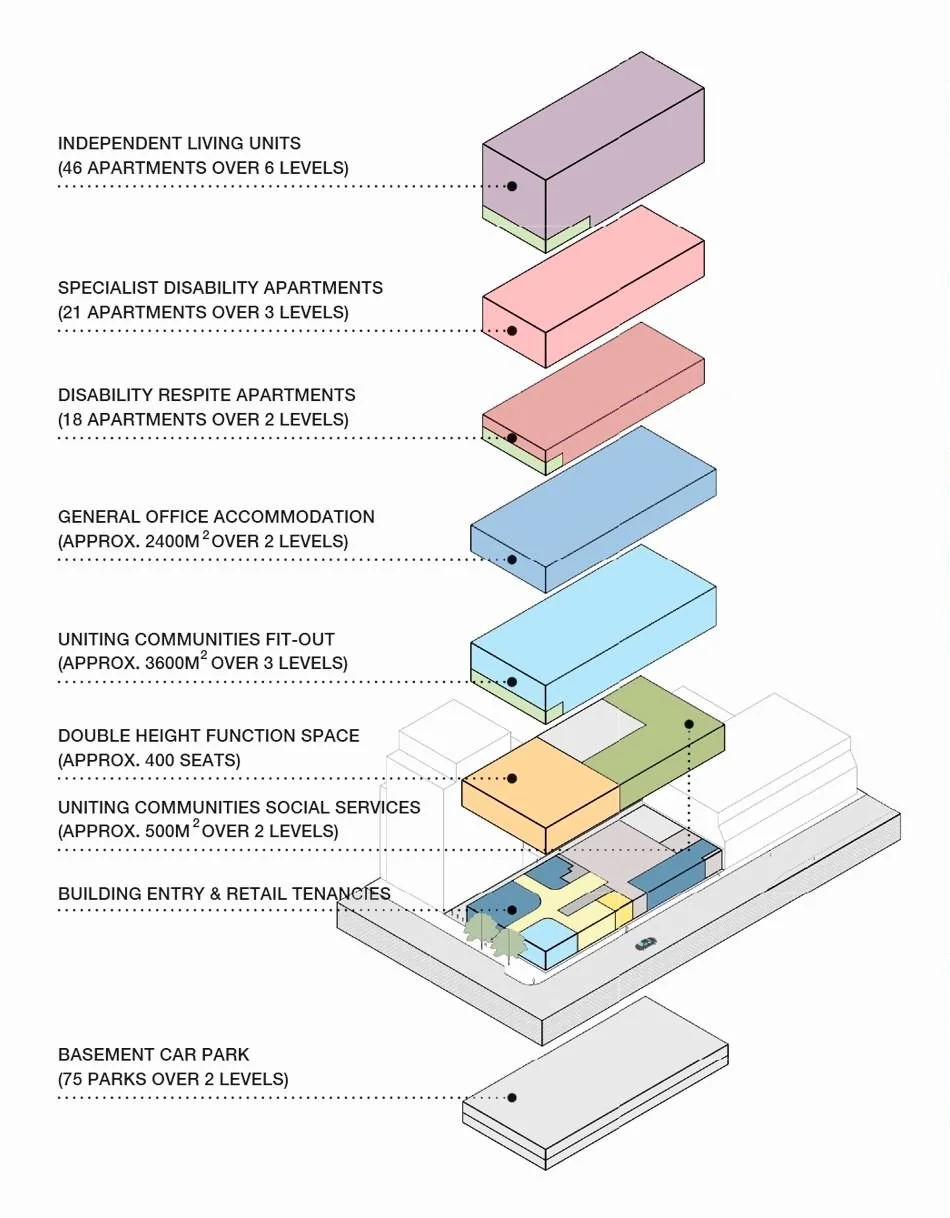
‘Radical’ model of mixed-use development. Source: Woods Bagot
How did stakeholder engagement contribute to community building?
We achieved that partly through the board game which we created for this project. We wanted to support a collaborative process for stakeholder engagement and so developed a board game with the key ingredients for the building. It created a new, more engaging way of communicating and facilitated open conversations amongst the group, allowing people to voice their priorities, share their concerns and understand some of the technical and spatial constraints of the building. In a short space of time, we were able to develop a deeper understanding of the people we were designing for, which groups could be combined, and which groups needed their own space. It also had other benefits for the stakeholders as they developed a stronger sense of agency and ownership in the design and development process, and an appreciation of the other stakeholders’ needs. We saw this process as a part of generating a sense of community for the building that would continue beyond our time working on the project.
In architecture, social value is the positive impact a building or place has on a person, a community or society and is measured by how a building or place fosters positive emotions, connects people and the environment, provides freedom and flexibility, and participation. What is the role of social value in the creation of shared spaces at U City?
It is increasingly important in mixed-use, community-centric buildings, to design shared space for a diversity of people with different needs. This approach recognised that our environments can positively foster social interaction and create a sense of belonging and community.There is great value in providing flexible and adaptable spaces that cater for a variety of activities and social gatherings. We included a diversity of spaces throughout U City, with shared spaces for communal living and informal meet-ups in the retirement and disability accommodation. On the lower and ground levels, public spaces include the ground floor lobby, cafe, restaurant and shop, the community space adjacent the commercial office space, a multi-purpose function centre adjacent community and medical services and the art studios. The mixed-use typology provided the ingredients to explore nuances in community-focused design that prioritise human interaction, support diverse needs and cultivate a sense of belonging and well-being.
What distinguishes U City from other projects is the inclusive approach adopted for the design of the public spaces which sought to normalise social services that are often conducted privately, by locating them within the publicly accessible areas. The greatest expression of this in the building was the design and treatment of the ground floor where all users come together in a ‘bumping’ space. Social services are delivered amongst the arrival area, café, and retail spaces with office workers, people arriving for the ‘disability’ hotel, and events and residents sharing the same space.
What can we learn from the social impact assessment about the value of shared space in community-centric buildings?
Research students at the University of South Australia conducted post-occupancy evaluation on three publicly accessible spaces in U City. The study demonstrated that these communal spaces were key to fostering positive emotions and a sense of belonging among diverse groups of residents, workers and casual users. It also demonstrated that for mixed-use buildings it is essential to have a diversity of communal spaces throughout the building. Equally important were the community champions who activated those spaces with a range of planned events and programs. [1]
What advice would you give to practitioners designing for retirees and persons living with a disability?
We saw great value in doing this. Key approaches that we adopted included providing the flexibility required to adapt living environments to respond to a change in a person's circumstances, such as increasing levels of disability that can affect people as they age. The accommodation was also designed to facilitate the continuum of care model, and the delivery of support services available for residents and casual users of the building.
Evidence-based resources on ageing in place and dementia incorporating haptic or intuitive design including the use of colour, light, sound and views to assist with wayfinding and orientation, provided invaluable information on designing to meet the specific needs that support an individual to remain independent and healthy. These include liveable housing and ageing in place design guidelines which informed all residential accommodation and shared spaces, with the addition of NDIS design guidelines and AS1428.1 Design for access and mobility for the specialist disability apartments and shared spaces.
Technology is playing an increasingly important role through smart technologies such as sensors that monitor a person’s health or activity to understand changes in daily routine that can show a decline in well-being to notify people when assistance may be required. Assistive technology can also help persons with disabilities perform tasks or activities that might be otherwise difficult or impossible.
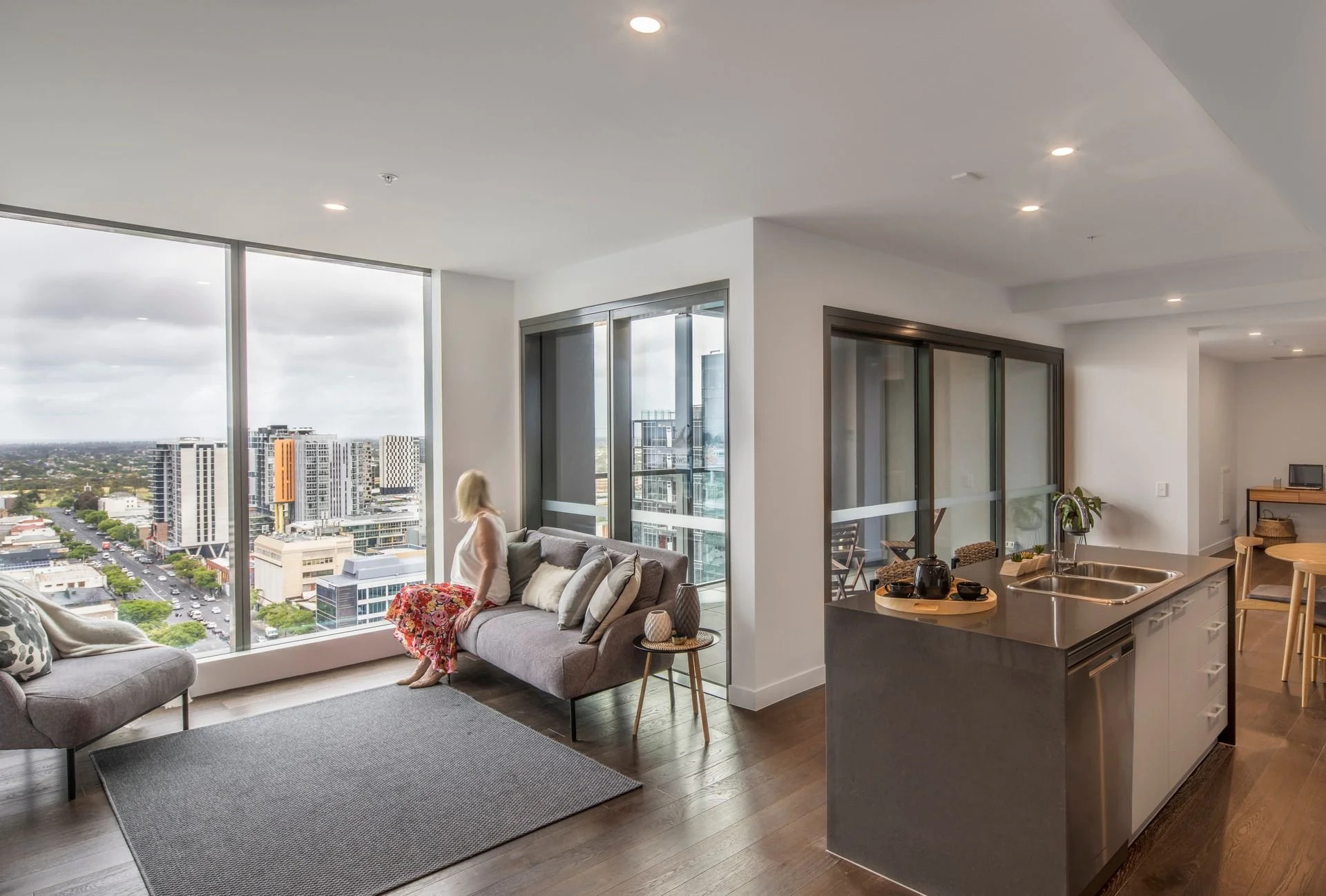
Retirement Living Apartment (Independent Living). Source: Trevor Mein
What are you most proud of and what are the key lessons other practitioners can learn from or opportunities to apply scale?
We’re really proud of the level of inventiveness in the brief and what was realised in the project. U City has had a great impact in a social way and a lot of positivity around it.
The biggest learning from U City I have applied to other projects is ‘Unity by Diversity’, and ‘if you design a space for everybody it will work for nobody’. While each use had to work independently, we also had to ensure that they were complementary to each other. It is important to understand how uses support, relate and complement each other, and how to harness the synergy between them.
While the design guides we relied on provided a good resource for our target audiences, it did suggest a knowledge gap and a need for further awareness and training when designing for diverse population groups and differently abled people. One area that could be improved is the way that technology is embedded in the project needs at the start rather than at later stages of the project. Integrating technology at the early stages could lead to efficiency gains and the application of different spatial standards.
The importance of a holistic approach is sometimes forgotten in buildings, including a lack of understanding of the social aspects of the project that are not always clearly understood. The continuum of care model offers many benefits to people by fostering well-being and providing support at different life stages. I can see great value in including a requirement to demonstrate a continuum of care plan in the procurement of government funded projects.
-
PROJECT
U CityCLIENT
Uniting CommunitiesARCHITECT
Woods BagotLOCATION
Tarntanya / AdelaideCOUNTRY
KaurnaPROJECT TYPE
Retirement Living and Specialist Disability AccommodationCOMPLETED
2019—
U City Adelaide is a mixed use development for Uniting Communities (UC), a not-for-profit organisation providing a broad range of community services for disadvantaged and disenfranchised people.
Located on the site of the former Maughan Uniting Church, the building is in the heart of Adelaide's central business district and a three minute walk to Adelaide’s Central Market.
Referred to as a ‘radical’ mixed use development because of the number and diversity of uses, services, amenities and tenants that it accommodates, the building provides headquarters for UC, houses many of their services, and includes civic, cultural, education, health, living, commercial and retail uses over twenty floors.
U City is recognised as one of the first projects in Australia to offer ‘vertical’ retirement living and specialist disability apartments in a high rise building within a capital city location, and the first in South Australia to achieve Carbon Neutral Certification.
The project is an exemplar of a well-designed, socially and environmentally sustainable high-rise infill development committed to the long-term wellbeing of all building users.
-
Continuum of care is “the practice of providing consistent and coordinated health care for a patient over a period of time and across the spectrum of care”. [2]
Disability Respite Apartment is defined by the National Disability Insurance Scheme as short-term accommodation, including respite, is support for when you need to live out of home for a short period.
Independent Living is used to refer to a form of supported housing where older people “are able to live independently without regular nursing or personal care assistance.” [3]
Specialist Disability Accommodation (SDA) is housing designed for people with extreme functional impairment or very high support needs that support people to live independently.
Uniting Communities is an independent not-for-profit community services organisation that is part of the UnitingCare network of community services agencies. They provide residential, social, commercial and community services for the people of South Australia.
-
[1] Barrie, H., McDougall, K., Miller, K., & Faulkner, D. (2023). ‘The social value of public spaces in mixed-use high-rise buildings’. Buildings and Cities, 4(1), pp. 669–689. Available at https://doi.org/10.5334/bc.339
[2] Regis College, (2024). ‘What Is the Continuum of Care?’. Available at https://online.regiscollege.edu/blog/what-is-the-continuum-of-care/
[3] Howe, A. L., Jones, A. E., & Tilse, C. (2013). ‘What's in a name? Similarities and differences in international terms and meanings for older people's housing with services’, Ageing and Society, 33(4), p.568.
-
-
Alex Hall is a Woods Bagot principal practicing across urban design, architecture, and interior design projects. Alex has designed and led numerous projects both within Australia and internationally, combining his commitment to creating designs that exhibit thought leadership and deliver a people-focused outcome.
As a registered architect in Australia, Alex’s work has ranged across residential, assisted living, health and wellness, education, hospitality, hotel, workplace, retail, large scale urban projects and public architecture. This broad grounding across many typologies enables Alex to lead our innovative design culture with his particular focus on the Australian and New Zealand regions. Formally recognised by the Australian Institute of Architects for his advocacy for the profession alongside award-winning projects, Alex fosters collaboration and design rigour within all his projects.
This interview is from ‘Towards an ethic of care: designing and delivering alternative housing models’, first published on Cities People Love and produced with the assistance of the Alastair Swayn Foundation. You can read the full report here.
To a future city is licensed under a Creative Commons Attribution 4.0 International License.